
Diwali, often called the Festival of Lights, is much more than just a celebration—it’s a warm reminder of hope, goodness, and togetherness. During this five-day festival, families decorate their homes with glowing diyas, colorful rangoli, and sparkling lights that brighten the night and the heart. Known as Deepavali in many parts of India, it is celebrated by Hindus, Jains, and Sikhs around the world, each adding their own customs and stories to the occasion. Whether it’s sharing sweets, worshipping for prosperity, or simply spending time with loved ones, Diwali brings people closer and marks a beautiful new beginning.
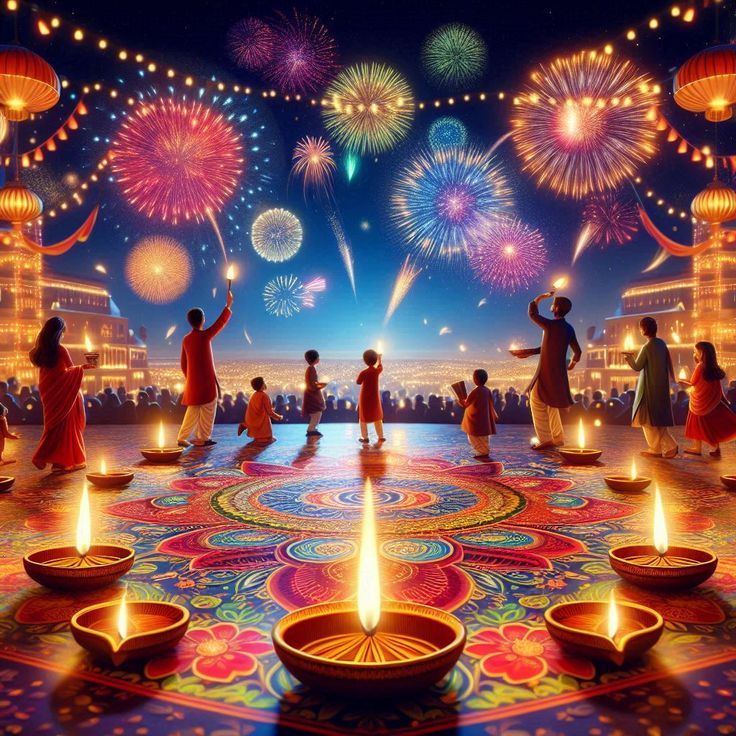
The triumph of light over darkness
At its heart, Diwali celebrates a timeless truth—the triumph of good over evil and the power of knowledge to dispel darkness and ignorance. Across India’s many regions and cultures, people connect with Diwali through different stories and legends. Some honor Lord Rama’s return to Ayodhya after defeating Ravana, while others remember Lord Krishna’s victory over the demon Narakasura. For many, it’s also a day to worship Goddess Lakshmi, welcoming prosperity and peace into their homes. These diverse traditions beautifully reflect India’s rich cultural heritage, all united by the shared spirit of light and hope.
Lord Rama’s Homecoming
In many parts of northern India, Diwali celebrates the joyous return of Lord Rama to his kingdom, Ayodhya. After spending 14 long years in exile and defeating the demon king Ravana, Rama came back home with his wife Sita and brother Lakshmana. To celebrate their return and honor the victory of righteousness, the people of Ayodhya lit rows upon rows of clay lamps, or diyas, illuminating the entire kingdom. That warm, glowing welcome has now become a cherished Diwali tradition, symbolizing the light of hope and goodness that guides us even through the darkest times.
Goddess Lakshmi’s birth:
For many, Diwali celebrates the day Goddess Lakshmi, the deity of wealth, fortune, and prosperity, emerged from the cosmic ocean during its churning.
Lord Krishna and Narakasura:
In southern India, Diwali is linked to the courageous victory of Lord Krishna over the tyrant demon Narakasura. The demon had brought misery to the world, capturing thousands of innocent women and spreading fear across the land. Krishna’s triumph not only destroyed this darkness but also restored freedom and peace. The day is celebrated as Naraka Chaturdashi, symbolizing the victory of light, courage, and justice over cruelty and oppression.
Bandi Chhor Divas:
For Sikhs, Diwali is celebrated as “Bandi Chhor Divas” (the Day of Liberation). It honors the day their sixth guru, Guru Hargobind, was released from prison and brought 52 Hindu kings with him to freedom in the 17th century.
The five days of Diwali
Diwali is a multi-day event, with each day having a special significance.
- Dhanteras: The first day is dedicated to cleansing and wealth. People clean their homes and often purchase new utensils, gold, or silver, believing it invites prosperity.
- Naraka Chaturdashi (Choti Diwali): The second day commemorates the defeat of the demon Narakasura.
- Lakshmi Puja (Main Diwali): This is the main day of festivities. Families gather for prayers to Goddess Lakshmi and Lord Ganesha, exchange sweets and gifts, and light up their homes with diyas and lights.
- Govardhan Puja: The fourth day often marks the new year in the Hindu calendar and celebrates Lord Krishna’s feat of lifting Govardhan Hill.
- Bhai Dooj: The final day celebrates the special bond between brothers and sisters, with sisters performing a tilak ceremony for their brothers and sharing food and gifts.
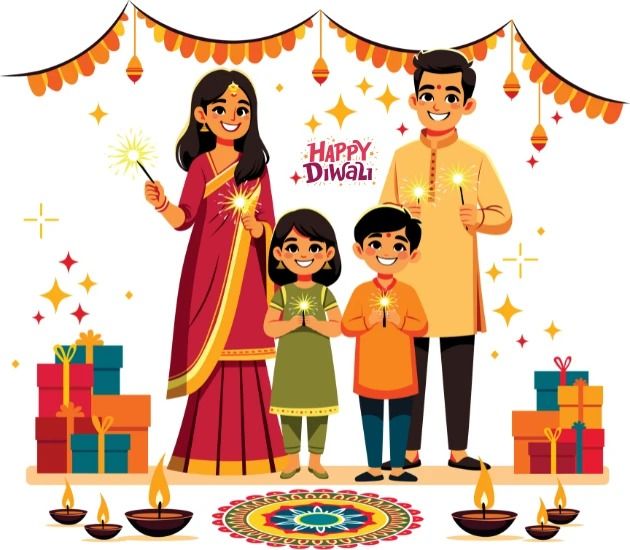
Festive traditions and modern celebrations
Beyond the grand mythological stories, Diwali is a time for heartfelt traditions and community bonding.
Decorations:
In the weeks leading up to Diwali, homes come alive with excitement and preparation. Families thoroughly clean and declutter their spaces, believing that a clean home invites positive energy and the blessings of Goddess Lakshmi. Doorways and courtyards are decorated with vibrant rangoli—intricate designs made from colored powders, flowers, or rice. As evening falls, rows of sparkling diyas and strings of lights illuminate homes and streets, creating a magical glow that fills the air with joy and celebration.
Feasting and Gifts:
During Diwali, every home becomes a hub of warmth and hospitality. The air is filled with the irresistible aroma of freshly made mithai (traditional sweets) like laddoos, barfis, and jalebis, along with a variety of savory snacks. Families gather in the kitchen to cook together, share stories, and laugh over memories. Throughout the festival, friends and relatives visit each other’s homes, exchanging not just sweets and thoughtful gifts, but also love, blessings, and the joy of togetherness.
Fireworks and Sustainability:
Diwali nights are known for their sparkling skies, as fireworks light up the darkness in bursts of color and celebration. For many, the sound of firecrackers adds to the festive excitement.
The spirit of Diwali
More than just a festival of lights, Diwali is a time for introspection and renewal. It’s a reminder to let our inner light shine, to share happiness with those around us, and to welcome new, positive beginnings into our lives. As the diyas flicker and the laughter echoes, Diwali reminds us of the power of community, compassion, and the enduring human spirit to overcome darkness with light.

Leave a Reply